One source of risk truth
Maintain consistent risk IDs, taxonomies, ratings, ownership, controls, evidence, actions and reporting across the organisation.
One connected risk operating system
Risk information is often spread across spreadsheets, emails, policy folders, compliance trackers, incident logs and disconnected assurance reports. Fasperion ERM creates one controlled environment in which risks, controls, obligations, incidents, actions, evidence and approvals remain linked from identification through closure and reporting.
Maintain consistent risk IDs, taxonomies, ratings, ownership, controls, evidence, actions and reporting across the organisation.
Identify deteriorating risks, overdue reviews, KRI breaches, control weaknesses, incidents and remediation delays before they become larger problems.
Assign clear owners, reviewers and approvers, with deadlines, reminders, escalation rules and complete audit trails.
Turn detailed operational risk information into concise risk profiles, trends, heat maps, exceptions and decision-ready reports.
End-to-end risk lifecycle
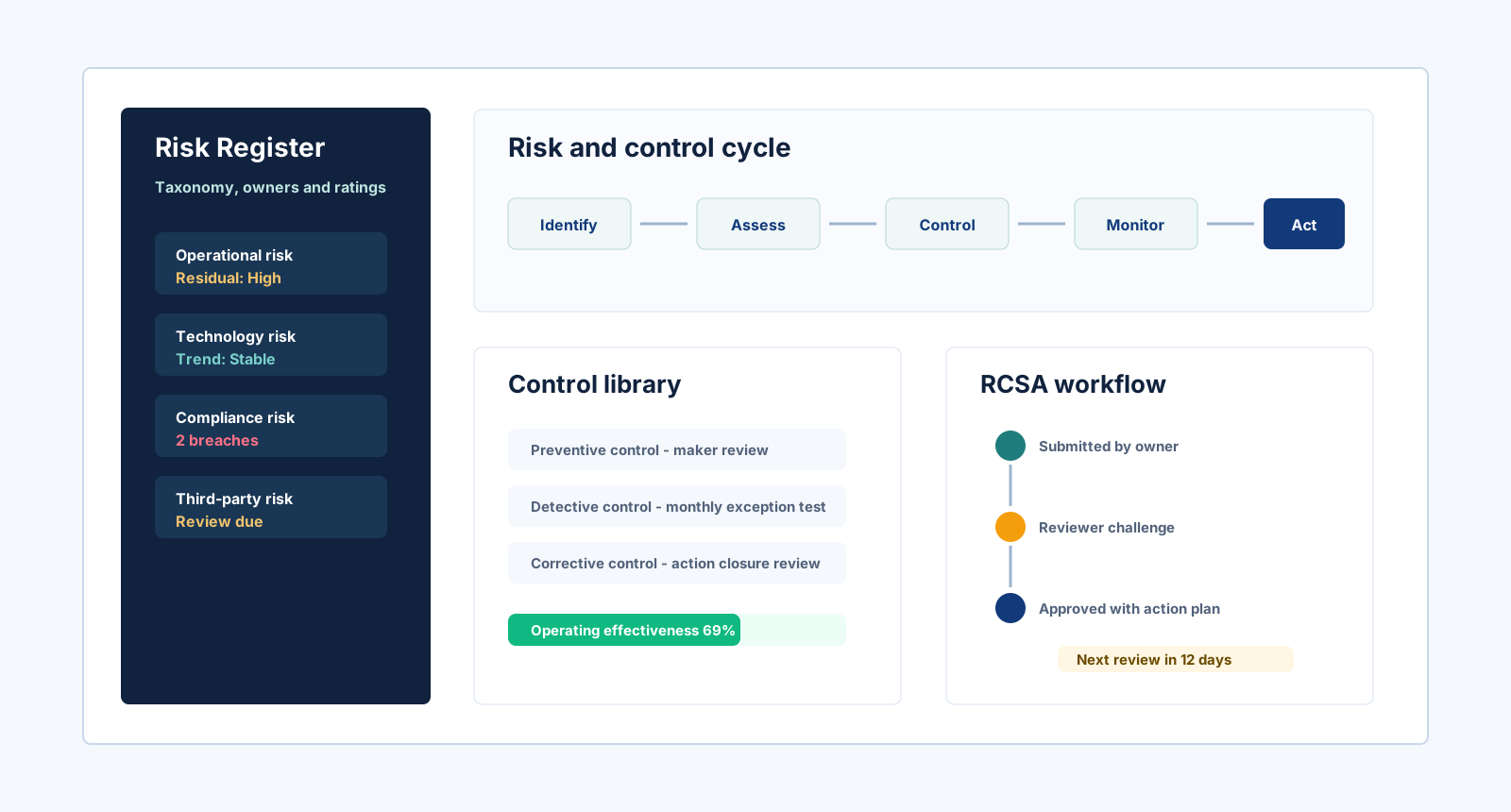
Fasperion ERM connects the activities that normally sit in separate files and teams. Each stage updates the next, preserving context, ownership and evidence throughout the risk lifecycle.
Prepare the annual risk management plan, establish focus areas, define required information, assign owners and set review timelines.
Capture risks using a configurable taxonomy and maintain central risk registers with unique IDs and clear ownership.
Evaluate likelihood and impact, calculate inherent and residual risk, document rationale and compare exposure across the organisation.
Link risks to controls, assess design and operating effectiveness, retain evidence and identify control gaps.
Track appetite, tolerance, KRIs, mitigation plans, overdue actions, changes in exposure and emerging risk indicators.
Investigate incidents, analyse causes, implement corrective actions, escalate material matters and update affected risk profiles.
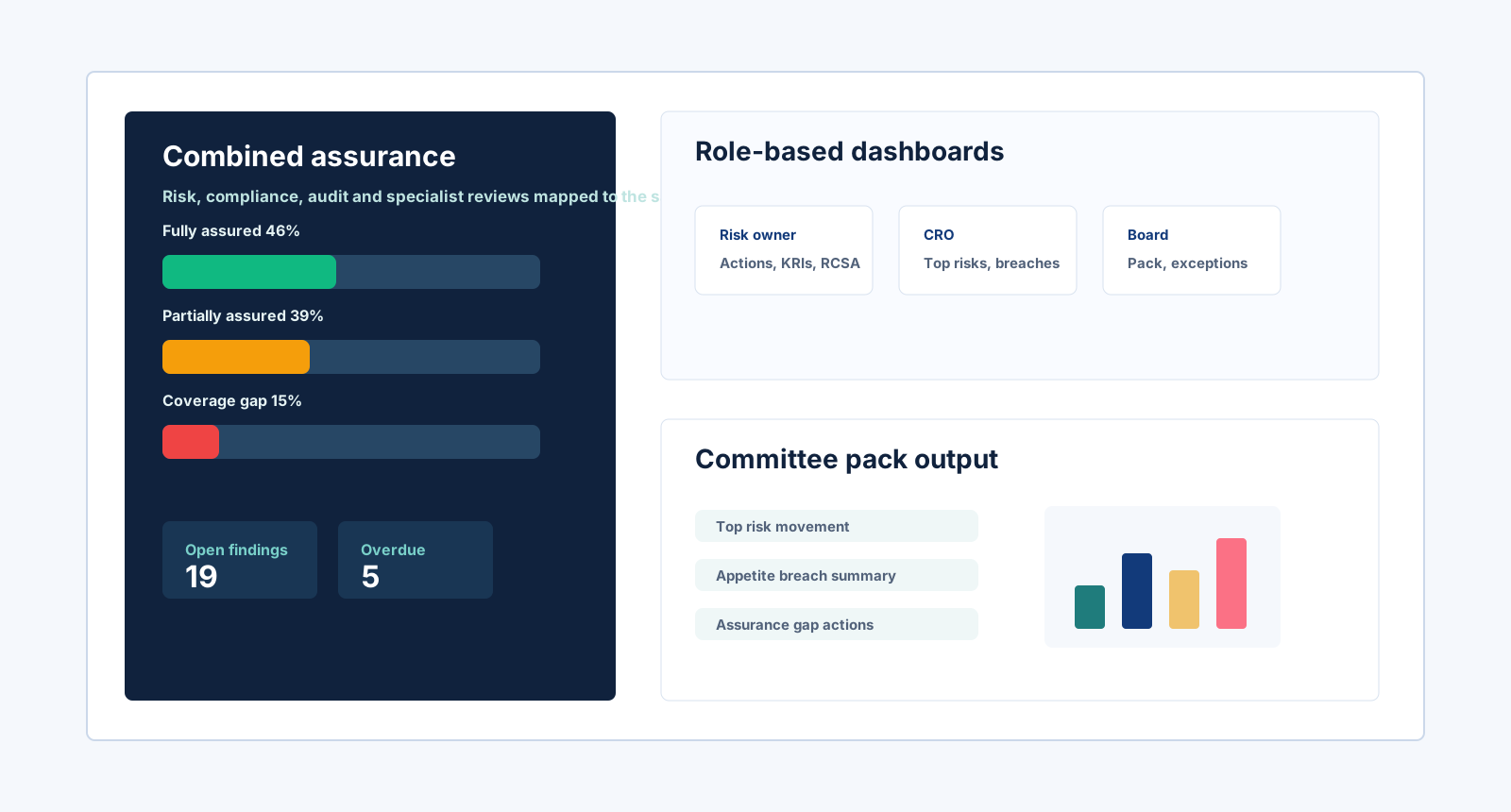
Coordinate compliance, risk, audit and specialist assurance activities and identify gaps, duplication and unresolved findings.
Provide management, committees, the Board and regulators with timely dashboards, heat maps and traceable reports.
Risk registers, appetite and controls
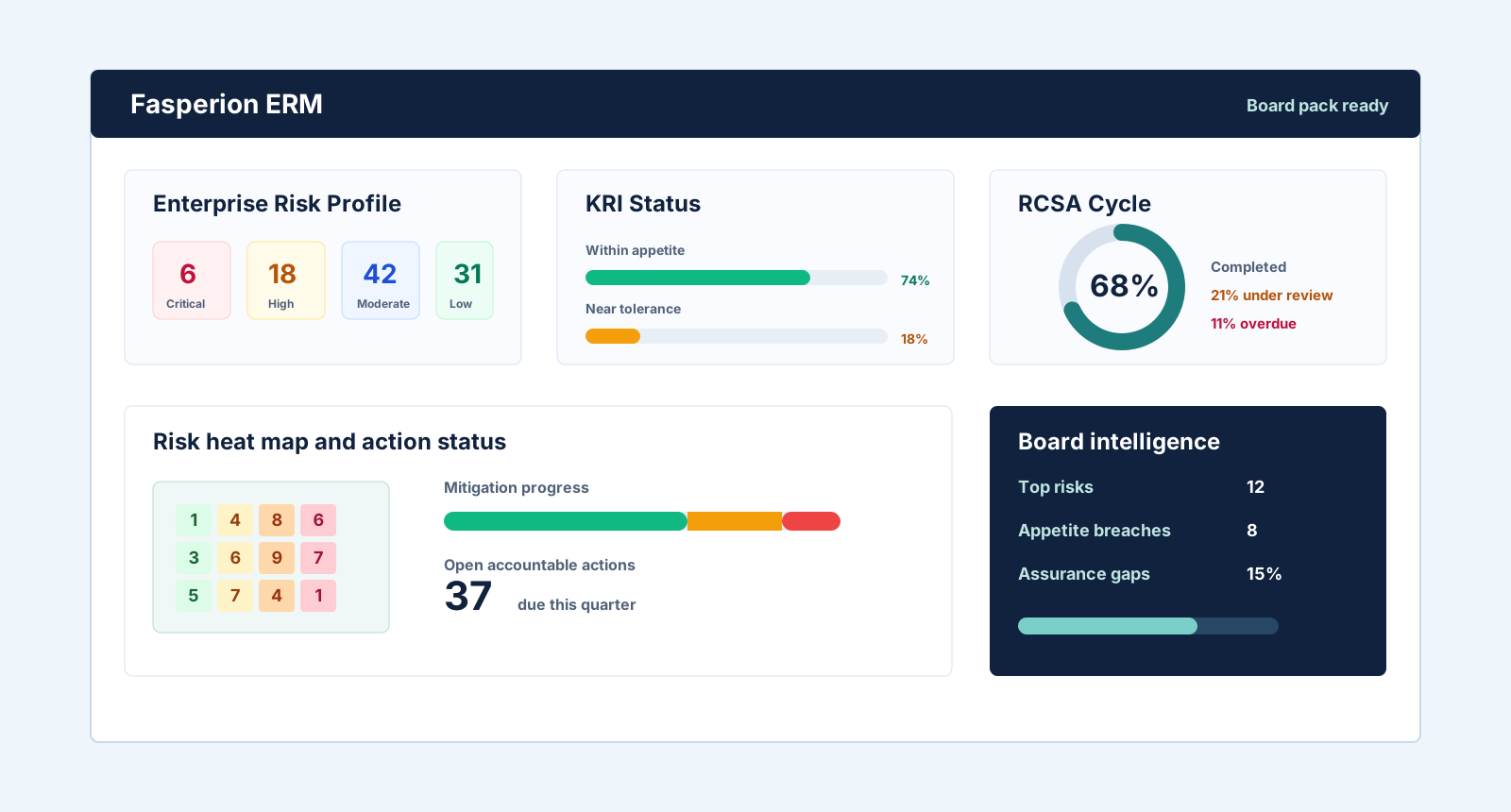
The platform connects risk registers, heat maps, KRI thresholds, RCSA status, mitigation progress, control effectiveness and assurance coverage so teams can see what is stable, what is changing and what needs escalation.
Five likelihood rows by five impact columns with visible risk counts.
Heat map summary: highest counts appear in moderate and high likelihood, medium to high impact zones. Six critical risks require attention.
Actual values are shown against appetite and tolerance thresholds.
Completed, under-review and overdue assessments remain visible by owner and unit.
37 accountable actions are due this quarter across risk treatment plans.
Monthly incidents with high-severity events marked in red.
Coverage gaps are linked back to the underlying risks, controls and assurance providers.
Core platform capabilities
Prepare and monitor the annual risk management plan with focus areas, required submissions, responsible owners, due dates and review milestones.
Create a configurable risk taxonomy and maintain authoritative risk registers covering credit, market, liquidity, operational, compliance, climate-related, strategic, technology and emerging risks.
Run consistent RCSA cycles using templates configured for different business units, products, processes and risk categories.
Convert risk treatment decisions into accountable, time-bound mitigation plans.
Maintain a reusable control inventory that can be mapped to one or multiple risks, processes, products, regulatory obligations and assurance activities.
Define risk appetite statements, quantitative tolerances and KRIs at enterprise, business-unit and risk-category levels.
Provide real-time, role-based views of risk exposure, changes, exceptions and remediation.
Apply consistent process and scoring rules throughout the platform.
Policy, compliance and regulatory governance
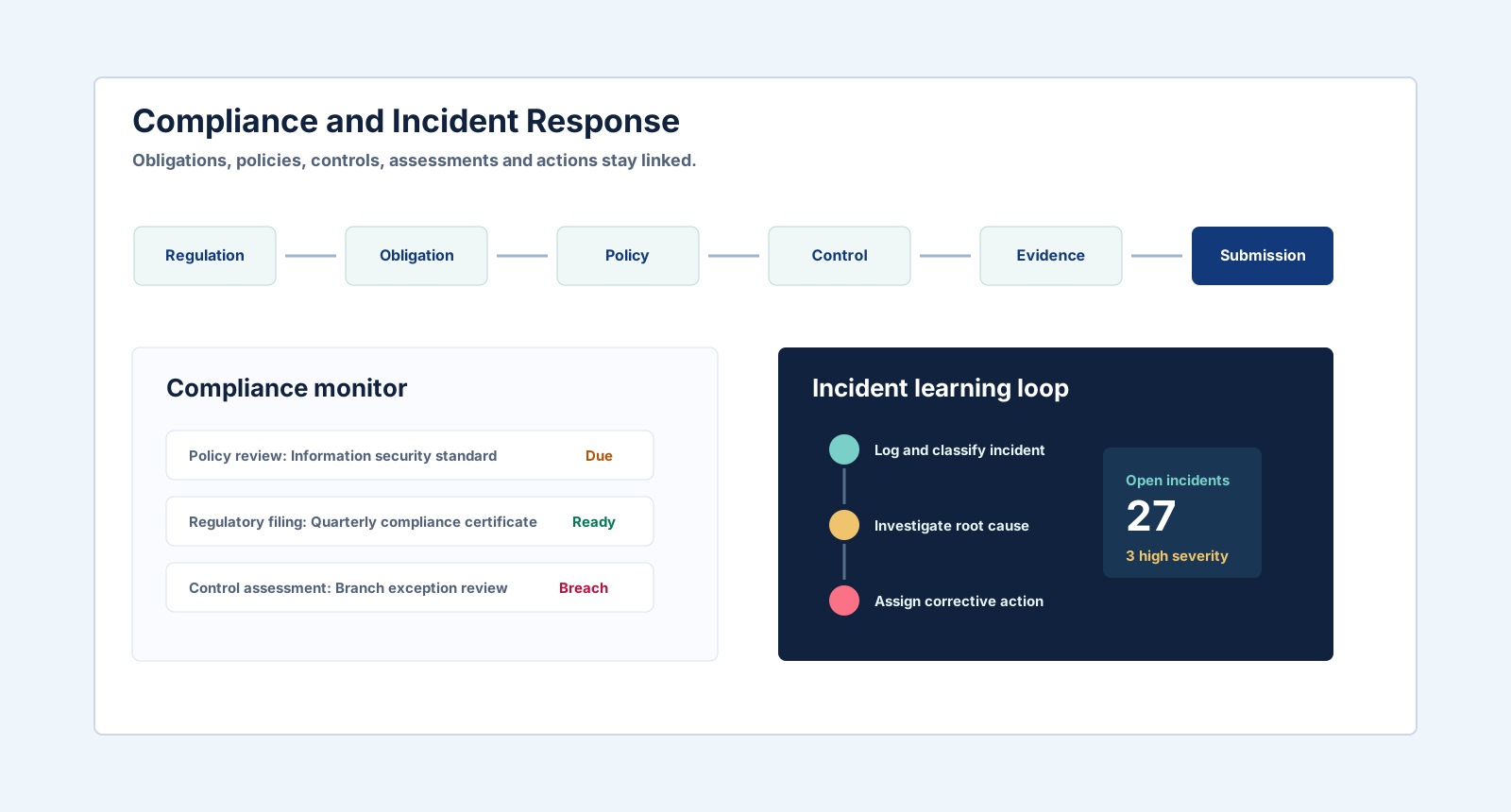
Fasperion ERM helps compliance teams move beyond document storage and deadline tracking. Regulatory obligations can be mapped to policies, controls, responsible units, assessments, actions, correspondence and submissions, creating a complete line of sight from requirement to implementation.
Maintain a central, searchable repository of policies, procedures, standards and guidance.
Configure checklists, self-assessments, internal compliance reviews and audit-style checks.
Maintain a structured inventory of regulatory requirements and changes.
Incidents, corrective action and learning
Capture incidents through configurable forms, connect them to existing risks and controls, manage investigation and root-cause analysis, assign corrective actions and update the risk profile when the event reveals a change in exposure.
Closure and post-incident review can update the related risk and control assessments, preserving the learning loop.
Monthly incidents with high-severity events marked in red.
Use trend analysis and predictive indicators to identify recurring causes, deteriorating locations, control failures and emerging operational-risk concentrations.
Decision-ready risk intelligence
Extend the platform as the risk programme matures
Fasperion ERM can begin with the essential enterprise risk, controls, compliance and incident capabilities, then expand into specialist modules without creating separate data silos or duplicate workflows.
Onboarding due diligence, risk tiering, assessments, contracts, service monitoring, issues, concentration and exit planning.
Business-impact analysis, critical processes, recovery objectives, continuity plans, exercises, disruptions and remediation.
Model inventory, materiality, development documentation, validation, findings, approvals, monitoring and change governance.
Technology risks, asset and application mapping, control assessments, vulnerabilities, remediation and resilience reporting.
Processing inventories, privacy assessments, data-subject requests, incidents, obligations, controls and evidence.
Risk-based audit planning, engagement execution, workpapers, findings, actions, reporting and follow-up.
ESG risk taxonomy, climate and transition risks, assessments, metrics, action plans and disclosures.
Map risks and controls to assurance providers, assess coverage, identify duplication and gaps, and provide an integrated assurance view.
Configurable without losing control
Different institutions use different risk taxonomies, rating scales, approval hierarchies, review cycles and escalation rules. Fasperion ERM provides configurable forms, workflows and scoring logic while preserving consistent governance and auditability.
The same engine supports Risks, Controls, Incidents, Compliance, Assessments.
Connected data. Better analysis. Responsible AI.
Integrate Fasperion ERM with core banking, ERP, HR, procurement, IT service management, security, finance and other systems through APIs and controlled data imports. Use analytics and governed AI to accelerate classification, identify change and surface patterns while retaining human review and approval.
Suggest risk categories, causes, consequences, impacted processes and related risks from submitted descriptions.
Summarise regulatory updates, identify potentially affected obligations and suggest responsible business areas for review.
Highlight policy sections that may require review when regulations, controls, incidents or organisational structures change.
Identify similar incidents, recurring root causes, potential control failures and emerging operational-risk patterns.
Draft management commentary, trend explanations, exception summaries and proposed actions for authorised user review.
Practical, phased implementation
Each phase uses the same organisation structure, user roles, risk taxonomy, control library, action framework, workflow engine and audit trail.
Fasperion ERM
Bring enterprise risk, controls, compliance, incidents and assurance into one connected platform. Start with the essential capabilities required to demonstrate the complete risk lifecycle, then scale the solution as governance requirements mature.